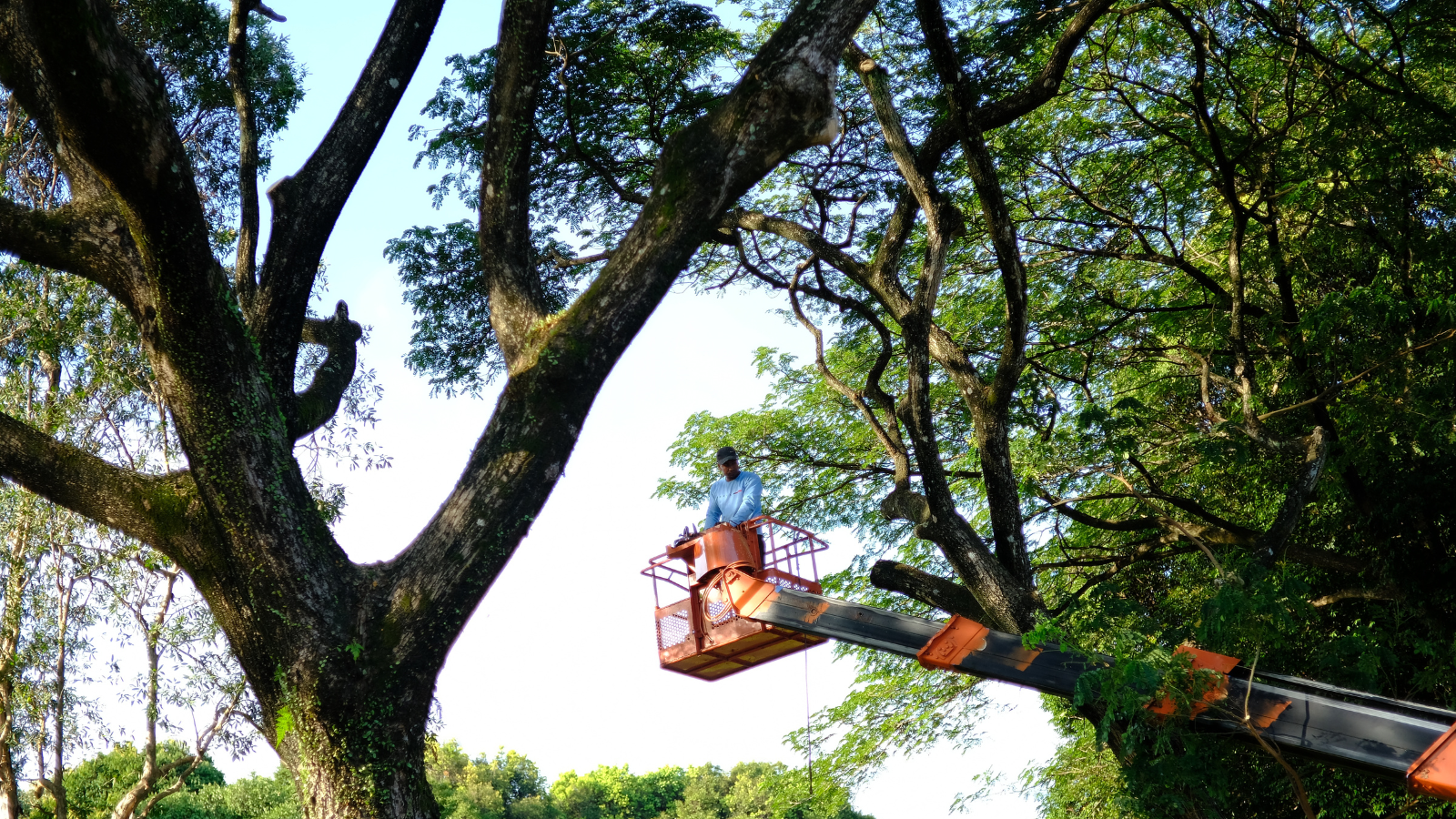


Trees play a vital role in our environment, providing shade, beauty, and oxygen. However, like any living organism, trees can become unhealthy due to disease, pests, or environmental stress. Identifying the early signs of an unhealthy tree can help prevent potential hazards and allow for timely intervention. Here is a detailed blog that will help you identify unhealthy trees, so that you can manage them to avoid decay.
Leaf Discolouration and Wilting
- Yellowing, browning, or wilting leaves may indicate water stress, nutrient deficiencies, or disease.
- Unseasonal leaf shedding can be a warning sign of tree distress.
- Watch for leaf spots, mildew, or fungal growth.
Bark Damage and Decay
- Peeling, cracked, or missing bark can indicate poor health or disease.
- Fungal growth, such as mushrooms at the base, suggests root rot.
- Soft, spongy, or hollow areas in the trunk may be a sign of internal decay.
Weak or Dead Branches
- Brittle, broken, or dead branches pose a safety risk and indicate declining health.
- Sparse foliage or an uneven canopy can suggest an issue with nutrients or water intake.
- Excessive limb shedding outside of normal seasonal changes can be a red flag.
Pests and Infestation
- Holes in the bark, sawdust-like residue, or sticky substances can indicate an insect infestation.
- Common tree pests include borers, aphids, and beetles.
- Unusual swelling or knots in branches may indicate disease-carrying insects.
Unstable or Leaning Trunk
- A tree that suddenly leans to one side may have weakened roots or structural damage.
- Visible root damage, such as exposed or decaying roots, can compromise tree stability.
- Soil heaving around the base suggests shifting roots and potential instability.
Lack of New Growth
- A healthy tree should produce new leaves, buds, and shoots each growing season.
- Slow or no growth could indicate root issues or overall tree decline.
- Compare with nearby trees of the same species to assess typical growth patterns.
Final Thoughts
Identifying unhealthy trees early can help prevent damage to property, landscapes, and ecosystems. Regular inspections and timely maintenance, such as pruning or professional tree care, can help address issues before they become severe. If you notice persistent signs of decline, consider consulting an arborist for expert advice and potential treatment solutions. Healthy trees contribute to a thriving environment, so keeping them in top shape benefits everyone.